- Be Yourself Marketing
- Posts
- What "Show & Tell" got right (& we forgot)... [🐝U]
What "Show & Tell" got right (& we forgot)... [🐝U]

EG Orren
February 01, 2026
Remember “Show & Tell” in grade school?
You didn’t stand up there trying to convince anyone.
You just brought the thing.
A favorite rock, toy, baseball card, sawed off cast, etc.
You showed it off & shared stories about it
& somehow… everyone leaned in.
Funny thing is …
that’s exactly why it worked.
It was never about convincing anyone your thing deserved attention.
You shared stories about it
Why you liked it.
Why it mattered to you.
Somewhere along the way, marketing forgot that lesson.
Imagine this ad at on a billboard or even in a commercial…
Your throat is dry.
You’ve been talking all day.
There’s relief within arm’s reach.
No product name.
No description.
No pitch.
Yet your brain already filled in the blanks.
That’s showing.
Now compare it to this:
Buy our premium bottled water.
That’s telling.
Same product.
But you have a very different reaction.
Why showing is better than telling
You can sell water WITHOUT using words like
water, cup, H2O, drink, etc.
(shout out to Anshika Bisht on LinkedIn for these images)

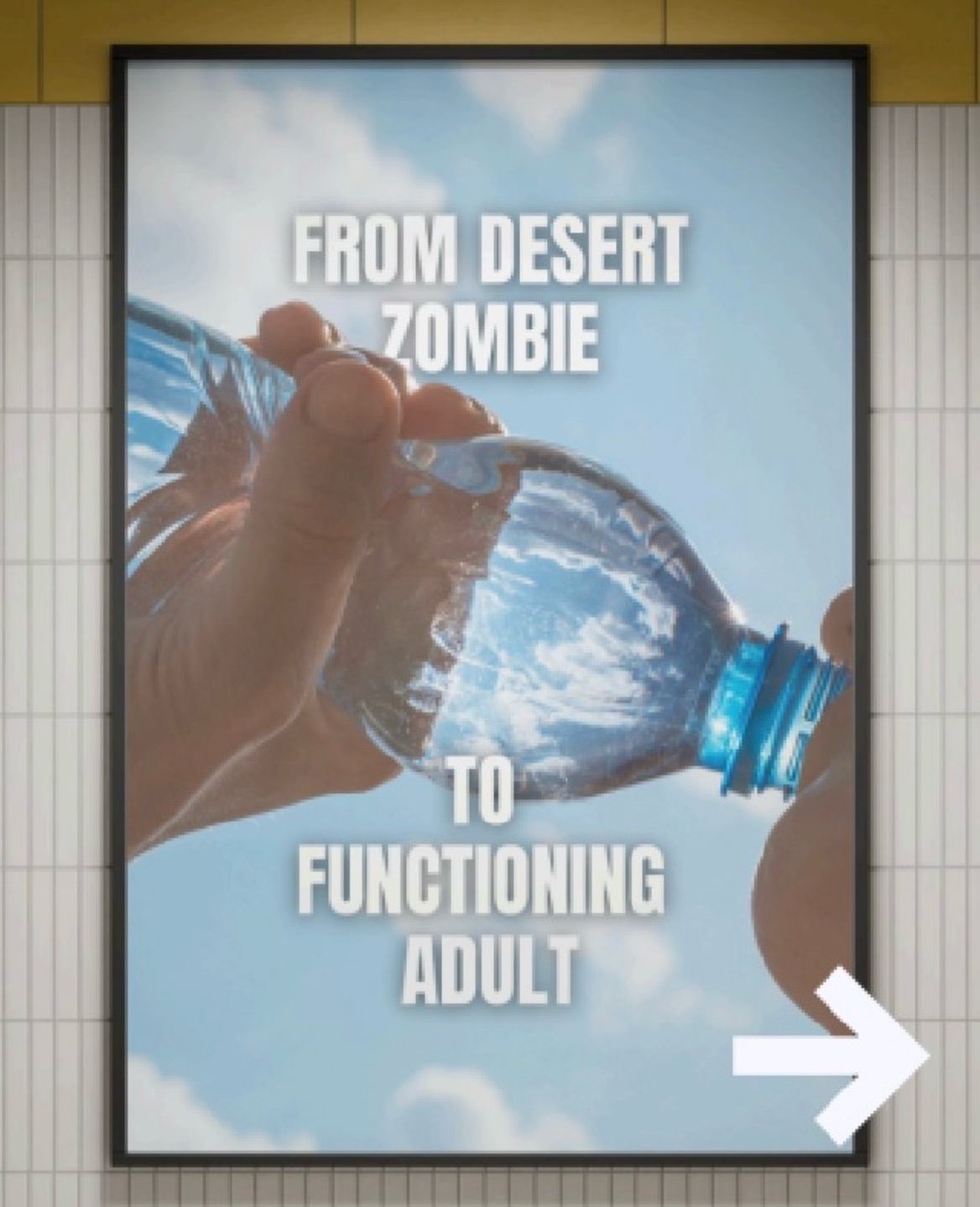

Your reaction wasn’t accidental.
What we’re actually buying
Because people don’t buy things
We buy outcomes, relief, status, ease, confidence, time, peace of mind.
Fun Fact: The hardest part of marketing isn’t explaining what you sell.
It’s resisting the urge to explain it too soon.
You know all about the:
→ Features
→ Benefits
→ Frameworks
The real struggle is with:
→ When to hold back
→ The discomfort of not “clarifying everything”
You need to recognize yourself in those words.
& talking about a "thing” just isn’t going to do that for you.
Context matters more than volume
More (or bigger) words don’t make people care more.
Better context does.
That’s especially important when you’re speaking to a crowd of strangers.
You need to keep their Level of Awareness for you & your product/service in mind.
Once you get their attention in that crowd of strangers, you can “talk” to them,
→ Ask a few questions to get to know them better … so you can understand what they’re dealing with
→ reflect what they’re telling you … so they see you “get” them.
→ Let them “raise their hand” to ask for more … so you can get their contact information to stay in touch
(notice I didn’t say sell them anything?)
THEN - & only then - should you start offering help…
… based on their specific information & desired outcomes
Because it’s all about what’s in it for them
Can you land a sale with a completely cold prospect that’s never heard of you before?
Sure
Is it statistically a lot harder & more frustrating?
Absolutely
When you stand on a corner with a bullhorn screaming “buy my __ “ long enough …
it will eventually work.
But wouldn’t it be a lot easier to sell dog-walking services by going to a dog park instead of the exotic pet expo?
same offer.
Better context.
So how do you find the words to describe outcomes & results …
without talking about you or naming your product?
→ turn your features into their benefits
→ make it relevant to them so they’ll listen
Once you have the words, let visuals reinforce the message
Once the words point to the outcome,
your visuals should quietly confirm it.
Remember to reinforce the feeling … not the product or your company
When the visual matches the promise, the brain connects the dots on its own.
They don’t need to be told what it is.
They understand what it does for them.
Just like the subway posters for water up above.
Why this works (& naming your thing doesn’t)
I’ve watched people shut down the second a product name shows up.
Some will just scroll on by without even a glance.
I’ve even done it myself. I actually admitted it to a client once when they “surprised” me with an ad they ran in a print magazine.
I didn’t see it.
I told them.
& if not only know about them but am working with them & missed it
how well do you think it landed with complete strangers?
It was uncomfortable to admit (for both of us!)
but pretending it worked would’ve been worse.
Not because it’s bad
But because now they’re judging instead of imagining.
The moment you name the thing, they lean back.
The moment they recognize themselves, they lean in.
Evaluation creates friction because now we’re deciding instead of feeling.
(& nobody ever takes action while they’re busy judging something!)
Recognition creates momentum because they feel understood.
& once someone recognizes their problem in your words
& feels the solution in your visuals…
That’s when they’re more likely to want what you’re selling.
Make it a great “showing off “ week!
EG
PS:
Want to help keep this newsletter subscription-free?
Choose whatever fits your life right now.
→ Click the ads … they quietly fund the newsletter $1-2 at a time
→ Contribute to the tip jar … from bus change to coffee to “this really helped” support
→ Share it … you get a consulting call after every 10 referrals
→ 1-on-1 deep dive in your business — exclusive subscriber coaching & consulting rates
Thanks for being here.
Seriously!
I do appreciate your support.
PPS:
Every email is based on what you ask for … the more something’s asked for, the faster it finds its way to the top of the to-write-about pile
📣 Tell me what you want to read about … here
🔗 Connect with me on LinkedIn … here
📈 Want to talk about better marketing results for your business by being yourself?
Find a time that fits your schedule.
