- Be Yourself Marketing
- Posts
- learning more doesn't create confidence ... [🐝U]
learning more doesn't create confidence ... [🐝U]
... but THIS does

EG Orren
January 07, 2026

“Once I know more… then I’ll be ready.”
That’s the excuse we tell ourselves
But it’s a myth that keeps us stuck in a learning loop,
… & it quietly costs us confidence, momentum, & money
especially as entrepreneurs
If you’re the kind of marketer who second-guesses their instincts because you think you “should know more”…
This is for you.
It’s not that we “don’t know enough”
We’re stuck because we don’t trust what we already know
Even though our brain’s been filtering good & bad marketing for years
Like the exact second your brain checked out of an ad this morning …
before you even knew why
Not because you’re the marketing expert.
& not because you study every-single framework.
Even companies with BIG teams, budgets, & reputations run ads that are:
→ confusing,
→ vague,
→ & even straight-up broken.
Every unclear ad doesn’t just waste your time & money
It trains your audience not to trust you next time.
So instead of trying to know more before you start…
Let’s practice paying attention.
Every ad you scroll past.
Each headline you ignore.
All the offers that make you pause (wanting to buy or roll your eyes)
This isn’t about dissing bad ads
We’re training your instincts & applying things you’re learning about
→ in this newsletter
→ from programs you’re taking
→ through books you’re reading
It’s not about knowing all the answers.
It’s about knowing what to look for
& asking better questions.
Let’s apply this in an ad breakdown …
I had a client who had a brilliant idea for a business & community
& they were 1,000% invested in it
On the surface, they were doing everything right
The problems were behind closed doors.
The team culture wasn’t 1 where you felt comfortable asking questions.
You had to stay in your own lane
Even when you (& others) knew you could help
That proved to be the downfall.
Sure, there was an investment in marketing & advertising

While I can’t show you my client’s ads, the ones below show a lot of the same mistakes.
& while I don’t know what happens in this business
my experience tells me they’re making many of the same mistakes
just with bigger budgets
Let’s start with the elephant in the room …
Would you click on an ad for to a “free 60-minute session”?
Seriously, just because they’re not actually calling it a “webinar” doesn’t mean that isn’t what it is.
“organizations worldwide” …. could that be any more vague?
→ how big?
→ what industries? or maybe which departments?
→ who in these “organizations worldwide” should be watching this?
→ & what’s the benefit of “faster & cleaner comms”?
Let’s assume this does sound like a good way to spend an hour & you clicked…
Today’s date is January 7th 2026
The “free 60-minute session” on the landing page shows last month/year.
They’re still running (& paying for) ads for something that’s already happened.
Adding insult to injury …
→ There’s no replay option on the landing page
(I’m assuming they forgot to update it … worse if they didn’t think to do that at all)
This made me literally laugh out loud …
→ “Can't join in December? Stay tuned for upcoming sessions.”
There’s no obvious way to sign up to “stay tuned”.
They do have something buried in the navigation bar along the top
But it took a hot minute to find it in all that clutter
& the only reason I did that was for this review.
Imagine the difference in impact (& conversion) with a clear date, a replay promise, & one line telling you exactly who this is for.
What else do you see wrong with the ad & landing page?
The framework thousands of teams use daily
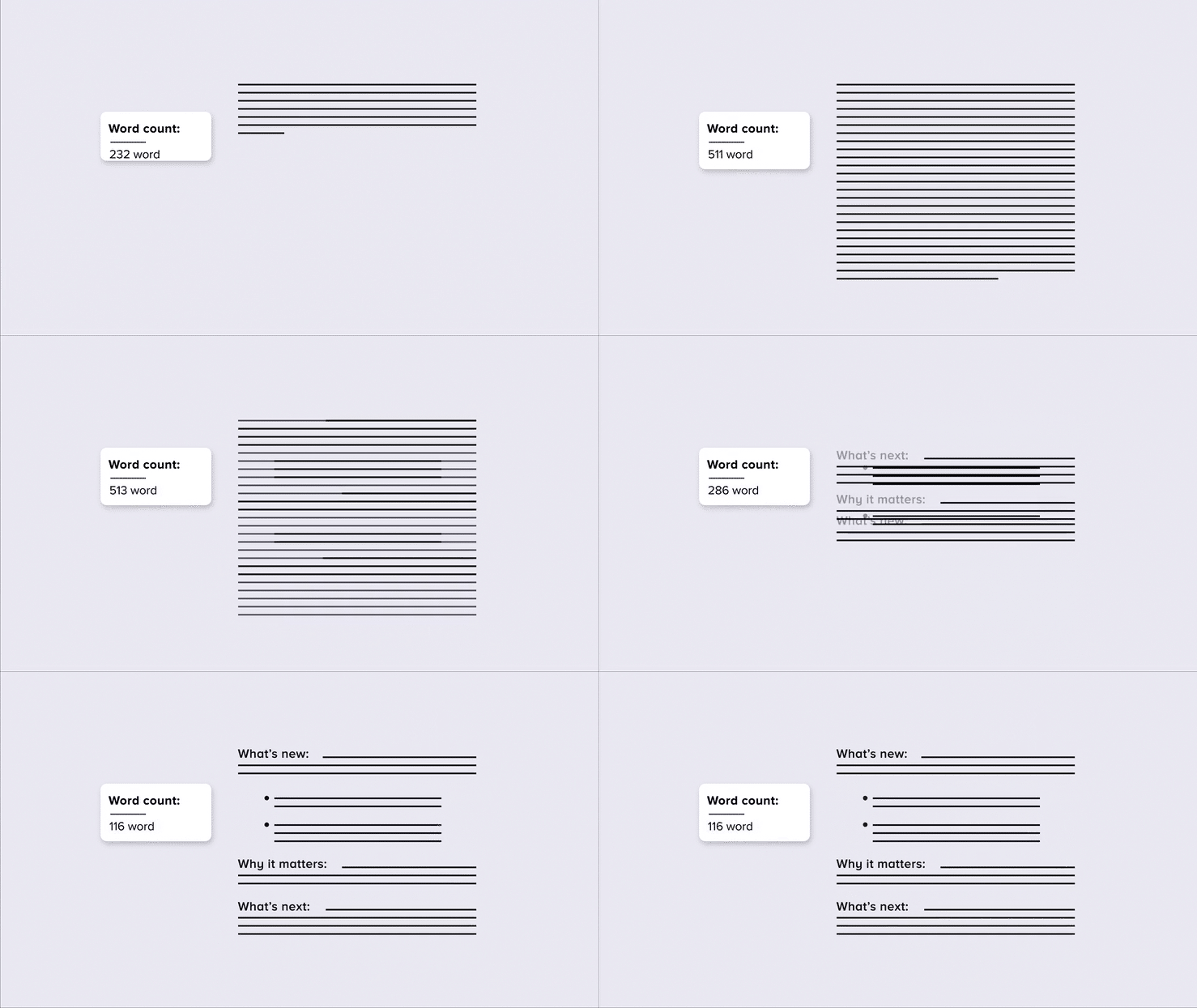
Organizations worldwide are adopting Smart Brevity to move faster with clearer comms. This free 60-minute session shows you how the methodology works and how to start applying it immediately.
When you break down an ad, you’re really asking at least 3 things:
→ What’s clear (& unclear)?
→ What promises (or assumptions) are being made?
→ Where’s trust being built (or lost)?
Every unclear ad doesn’t just waste your time & money
It trains your audience not to trust you next time.
That proved fatal for my client.
They would only listen to the outside “expert” brought in to buy ad space
& because I was working on retention, that’s the only lane I could talk about
Getting your message in front of “millions” sounds great.
But it’s about quality over quantity.
My 1st client made that same mistake just before I started working with him.
He was a musician who left the record label.
so he needed to do his own marketing
Like my other client, he was promised “millions” of views / impressions
& they delivered on their promise
But they weren’t the “right” people.
Let’s look at another ad for the same company …
This 2nd ad is about as vague as the 1st
… at least there’s no hour-long webinar
6 resources for 1 skill … used forever?
Let’s say it makes me curious …
→ What does that have to do with “Smart Brevity”?
→ & how does that tie into “Axios”?
“designed to make every message memorable, clear, and impossible to ignore”
Maybe they should have used that for this ad because
→ it’s clear as mud
→ not memorable (unless you count memorably bad)
→ I personally couldn’t ignore it but only because it shines a spotlight on the problem
& if you thought the ad was a head-scratcher, wait until you see THIS landing page!
Because there’s an awareness & benefit problem
When the message skips awareness, clarity collapses … no matter how strong the brand is.
Six resources. One skill you'll use forever
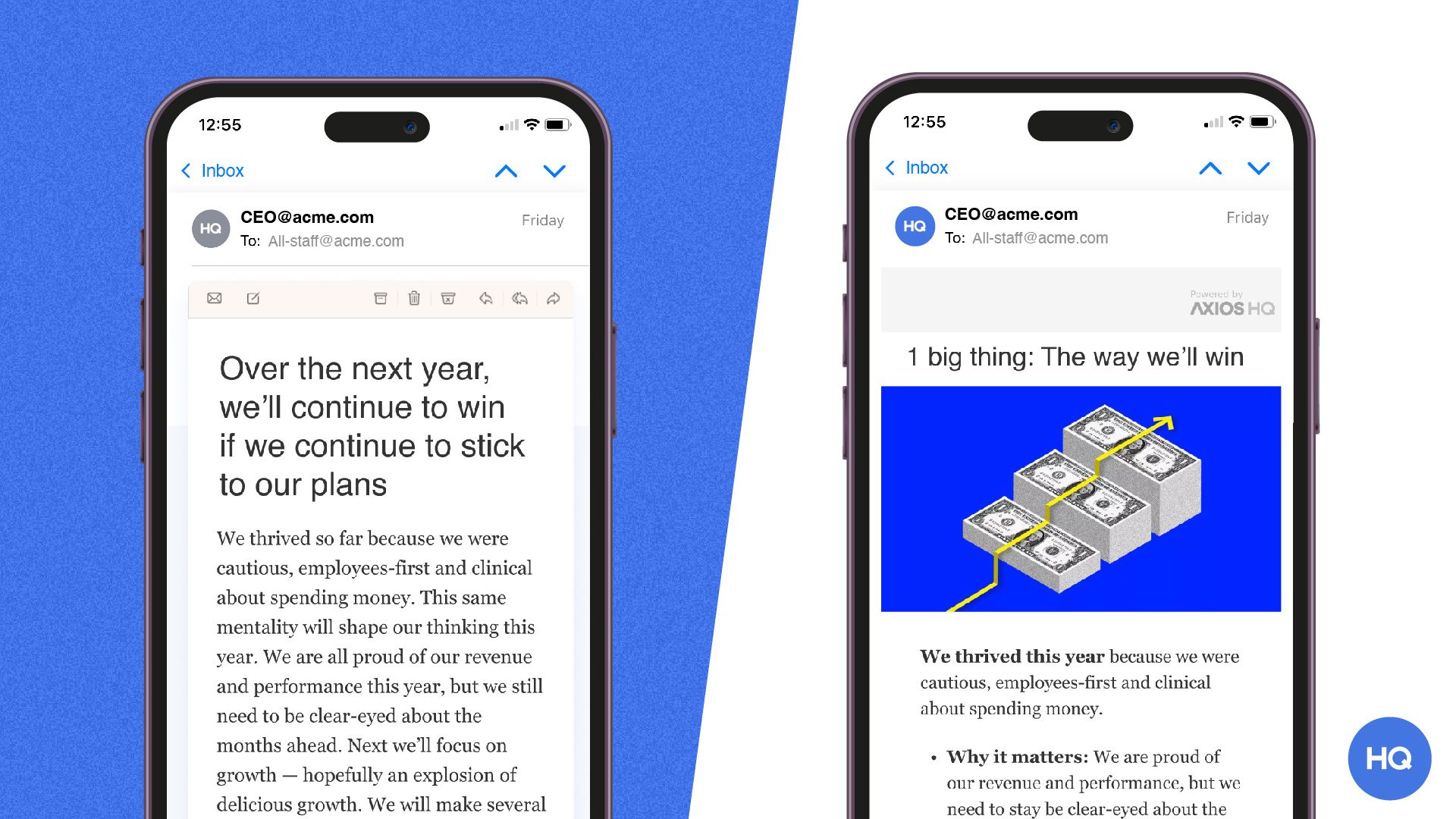
Smart Brevity is the methodology behind Axios — designed to make every message memorable, clear, and impossible to ignore. Our free toolkit includes the checklist, workbooks, and frameworks to start using it today.
Consider this:
→ there’s a team of people working on these ads (graphic design, copywriting, web page development, media buying, etc)
→ someone who’s a “marketing expert” came up with the ideas & signed off on running these ads
A lot of time & money went into the advertising
Not to mention more time & money in creating the webinar & toolkit
It seems they’re clueless in terms of the audience’s Levels of Awareness
There’s no clear understanding of using Features vs Benefits
& even though the event’s over, they’re still “paying for it” in more ways than 1
Because not only can you NOT access the information they’re promoting
they’re losing whatever level of “trust” that person may have had in thinking this company can help them.
Yes … I’ve done things like this before (& still catch myself doing it)
When you’re juggling everything as a solopreneur, clarity quietly slips away
& you don’t notice it until someone else points it out … or worse, stops trusting you
What’s something you would change - or at least point out - that can help this company with a message that’s “memorable, clear, and impossible to ignore” for all the right reasons?
your turn …
This week, I want you to try something different.
Don’t scroll past ads.
Study them.
It’s time to stop trying to know-it-all before you get started.
While other people are moaning & groaning about having to scroll past “too many ads”
Take some time to look at what other people are doing.
What’s working?
& more importantly, what isn’t?
How can you learn from their mistakes?
Every time you break down an ad like this, you’re doing something powerful.
You’re training your eye.
Not to criticize or copy.
But to understand why something works … or doesn’t.
That’s how you build confidence:
→ not by memorizing tactics or rules
→ not by trying to know everything
→ but by learning to trust your own observations
If “experts” with teams, budgets, & credentials miss the basics like clarity, accuracy, & audience fit, you don’t have to wait any longer to start.
That includes being willing to share your opinion
Confidence doesn’t come from knowing “everything”
It comes from noticing …
being willing to ask for (& listen to) others
then acting on it …
Then look at your own marketing through the same lens.
Share what you’re seeing as it relates to your audience.
You don’t just get content out of it
It shows people you “get” them.
THAT is real marketing.
Now how can you apply that to your own marketing?
What can you do so things are clear instead of confusing?
Make it a great “confidence-building“ week!
EG
PS: When you’re ready, schedule a call to talk through 1 of your own marketing pieces to see how having that 2nd set of eyes can help … & to learn to hear more than 1 opinion.
