- Be Yourself Marketing
- Posts
- Myths stopping you from starting a newsletter ... [🐝U]
Myths stopping you from starting a newsletter ... [🐝U]
I hear these excuses constantly ...

EG Orren
March 15, 2026
One of the most troubling conversations I’ve had this month went like this …
Someone told me they were interested in writing newsletters for clients
But they’re not going to do anything about it because
“AI is going to replace me anyway”
I’ve actually been hearing versions of that pretty regularly since I started my newsletter.
Honestly… most of the things stopping people from starting newsletters (or writing for others) has nothing to do with newsletters (or AI) at all.
They’re just myths dressed up as cautionary tales
The kind that stop people in their tracks … before they even start.
Things like:
→ AI’s going to replace me so why get started
→ I don’t know how to use the platforms
→ I’m not a graphic designer
→ My emails won’t look “professional”
Let’s call it what it really is …
#FakeNews
It’s not because those things don’t exist.
But none of them determines whether a newsletter succeeds
& if someone’s pushing those ideas…
There’s usually a course, software, or service being sold on the other side.
To be honest… I almost talked myself out of starting this newsletter too.
I kept thinking:
“Who actually wants yet another newsletter clogging up their inbox?!”
Turns out a lot of people do.
When it’s worth reading.
The AI elephant in the room
Yes, AI can help with newsletters.
it can …
→ brainstorm ideas
→ outline topics
→ even help clean up messy drafts
Honestly, I use AI too
& I’m open about how
But here’s the thing most people misunderstand about AI
Again, yes, it can help you write
But it can’t help you be interesting
Because the part people actually subscribe for isn’t all the information
AI can summarize what already exists online.
& it writes in the “average” of the “thumbs up” feedback it learns from
(regardless if it’s someone who’s been writing for 40 years or just starting today)
But it can’t ever replace the lived experience of the person behind the business.
& that’s the part readers actually connect with.
Your experiences.
Your opinions.
Your stories.
Your perspective
AI can spit out information.
A newsletter builds relationships.
But before we break the rest of these myths apart, let’s get clear on something most people skip.
Here’s the simplest way I’ve found to explain newsletters.
A newsletter is just a consistent conversation.
With people who raised their hand & said
“yeah… I’d like to hear from you.”
That’s it.
& you’re staying in touch by sharing relevant information to more than 1 person at a time
No fancy funnels.
No in-your-face selling strategies.
Just staying in touch.
& when you do that long enough…
something interesting happens.
When someone finally needs what you sell…
You’re not a stranger.
You’re the person who’s been showing up in their inbox all along.
Most marketing makes the same mistake…
it rushes the sale
You’ve seen it before.
You Google something ... or visit a website once…
& suddenly you're getting slammed with retargeting ads & pop-ups,
all trying to sell you something you barely understand yet.
We’ve all been on the wrong side of the “sleazy used car salesman”
& the last thing we want is to come across as that to our customers.
Newsletters don’t sell … not directly
They do something different.
You stay in the conversation.
Which means when someone finally needs what you sell…
You’re the person already sitting in their inbox.
You’re the person they “know-like-trust” enough to “try-buy” your solution to their problem.
How you can use them
Here’s the part most people miss …
Newsletters don’t just live at the beginning of the buying journey.
They support almost every stage.
→ before someone trusts you
→ while they’re evaluating options
→ after they become a client
The immediate “buy now” moment is about the only place email (& newsletters) don’t live … yet.
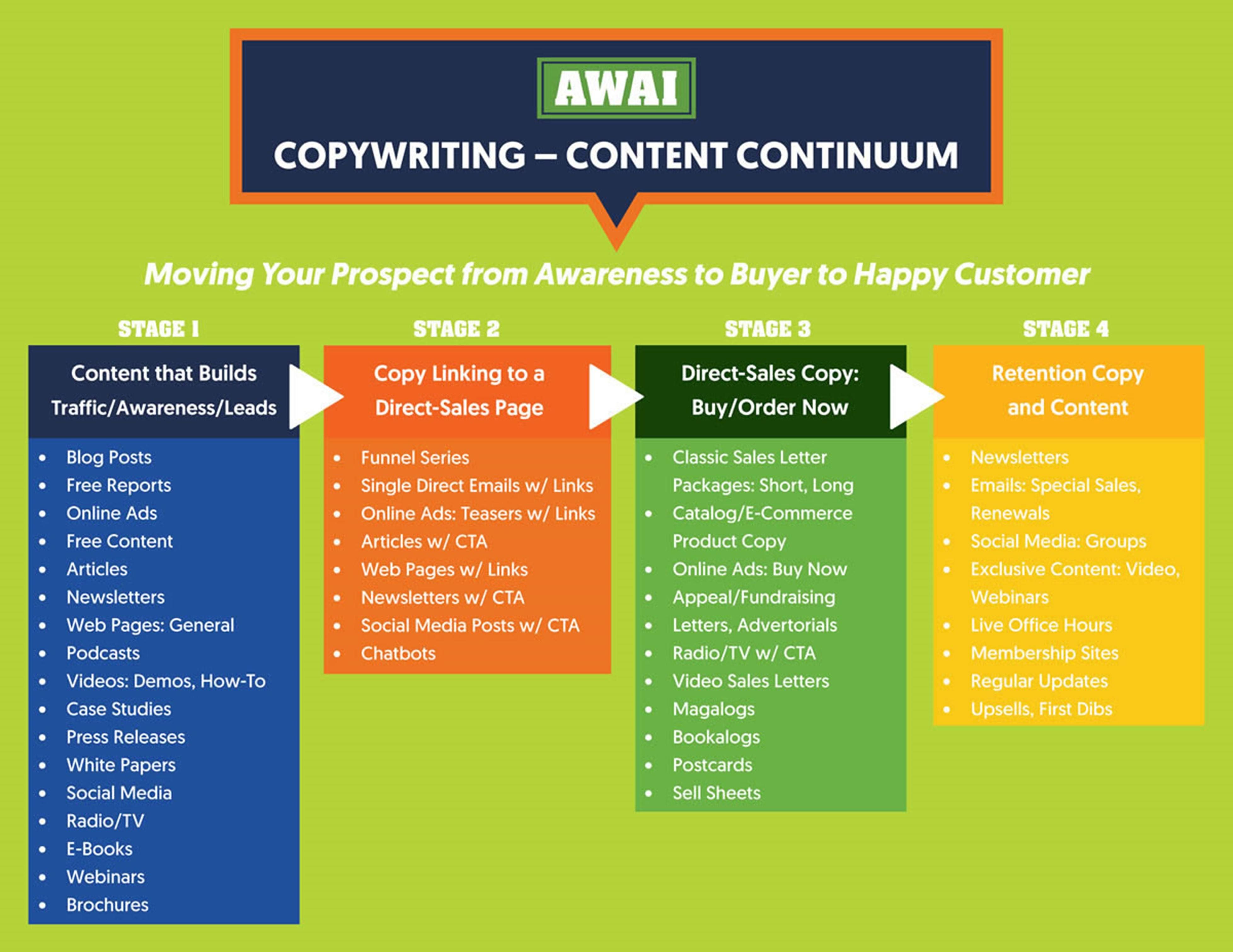
Everything else is fair game … as long as it’s relevant to them & their "Level of Awareness”
If you’ve been reading this newsletter for a while, you might have noticed something.
It looks a little different than it used to.
→ more sub-heads
→ fewer gifs/memes
Why?
Because of your feedback
Some asked for sub-heads to help skim through
Others said that too many gifs/memes distract from the message
Because formatting isn’t about making emails prettier.
It makes the reading experience easier.
When images might help
Images & design can help in some cases.
Some things that rely on visuals include:
→ food brands
→ fashion
→ art
→ physical goods
But even then, images support the message
They never replace it.
Some of the newsletters I’ve worked on prove this point pretty clearly.
Online Community
The 1st newsletter I developed was for an online community of female entrepreneurs.
I purposely made the format text-only
with a few simple sections
→ information on live events (with registration links)
→ mini-bios on any guest speakers that - again - are relevant to the reader
It went out once a month
& took less than an hour to write, edit, & upload
Readers loved it because they could plan ahead.
More members showed up & were more engaged during the live sessions
& it carried into the online forum that then got more people wanting to attend future live sessions.
& that not only improved retention, but it attracted new members.
It worked because it was useful
DTC (direct-to-consumer)
Selling very high-end food products (that I knew nothing about)
So I consumed everything I could online about the company, the owners, & the ideal audience.
I didn’t design, upload, or schedule anything.
But I did make recommendations.
Within a year, that company got a 35.94% increase in revenue from a 23.8% increase in orders via email.
Personally, I think they could have done better IF they had more communication between the team members & coordinated with the social media team.
It was the “good enough” attitude from the agency I was writing for that finally had me move on.
Musicians
“I've gained more followers in 1 day with this campaign than all of last month before working with you.”
Want to know why?
They’re connecting with their audience & sharing things that are relevant & interesting to them … as music fans.
This is a perfect example of where AI falls short.
AI can write about music theory all day long.
It can teach chord progressions
& describe songwriting structure … sort of.
But it can't share what happened backstage after a show.
Or describe the feeling when a crowd sings the chorus louder than the band
Or explain the story behind a song
& it definitely can’t capture that weird mix of adrenaline & exhaustion after performing for 2 hours straight
Those are all human experiences.
& that’s what connects fans to the artist.
That connection is what you build on.
& it’s not exclusive to music.
Multiple Languages
Imagine having a newsletter with 2 languages & both versions having up to 24.2% click-thru rate on newsletter with a 65+% open rate
Those are insane numbers … I’m nowhere near that with this newsletter
& I don’t know anyone that consistently gets those numbers … not even the big “email marketing gurus”
Most are excited with less than ½ those numbers.
Even something that sounds simple, like English → French translation, can't be trusted entirely to AI.
Because language isn’t just words.
It’s cultural references.
Local phrases.
Shared humor.
A literal translation might be technically correct…
but it’s going to feel completely wrong to the reader.
That’s why a human still has to guide the message.
The troubling tech myth…
Here’s another myth that stops people before they start…
The idea that newsletters require you to become some kind of tech expert.
Across every newsletter project I’ve ever written for…
& all the coaching & consulting I’ve done to launch & scale newsletters
I’ve never had to log into the client’s system, upload, setup, & schedule the email.
EVER.
Someone on their team handles that.
Or they do it themselves.
The complicated systems people worry about usually aren’t the real problem.
The real challenge is much simpler.
Knowing what’s worth saying.
Questions to ask yourself (& your clients) about newsletter formatting
If you’re thinking about starting a newsletter - for yourself or clients - the real issues aren’t
→ learning graphic design
→ formatting on different platforms
→ AI replacing you
What do the people reading it actually care about?
What’s in it for them?
Because when the content resonates
almost everything else becomes optional
Sure, AI can help you produce content faster.
But it still needs a human voice guiding the message.
Yes, formatting & images can help
& understanding platforms helps
But none of those things are the foundation.
TL;DR
Newsletters really aren’t complicated.
You don’t need perfect formatting.
You don’t need fancy design experience.
& you definitely don’t need to worry about AI “stealing” your job.
You just need 2 things.
1 - Know the people you’re writing to.
2 - Give them something worth opening.
Do that consistently…
& 1 day you'll realize something strange.
People aren't just opening your emails.
They're waiting for them.
If you’ve been thinking about starting a newsletter (or writing them for clients) but haven’t started yet…
What’s actually stopping you?
Just hit reply & tell me.
Is it 1 of the myths above…
or is something else getting in the way?
Seriously, let me know!
Make it a great “consistent conversational“ week!
EG
PS:
If this newsletter helps you think differently, grow more honestly, or feel a little less alone building your business … there are a few ways you can support it (& keep it free for everyone).
→ clicking the 2 ads below
Clicking the ads you see helps fund the newsletter with just 10 seconds of your time.
Bonus points (to you) for getting a chance to study their structure … because I DO check every single 1 before approving them.
→ keeping it reader-supported (by choice, not guilt or force)
If this newsletter earns a spot in your week, you can chip in whatever feels right …
bus change, a coffee, or “wow this really helped” $.
No pressure. Ever.
→ Introducing your people to me
If this feels like something your biz friends would find helpful, I’d appreciate you sharing.
& as a thank you, you get a 1-on-1 coaching call from every 10 referrals.
→ Getting a 2nd set of eyes on your business
When you’re ready for 1-on-1 help in your business, schedule a call with your special subscriber rate
PPS:
Every email is based on what you ask for … the more something’s asked for, the faster it finds its way to the top of the to-write-about pile
📣 Tell me what you want to read about … here
🔗 Connect with me on LinkedIn … here
📈 Want to talk about better marketing results for your business by being yourself?
Find a time that fits your schedule.
